Workouts1 min read
Workout for beginners: where to start at the gym
A simple guide for anyone who has never trained: your first workout, how many times a week to go, and the most common beginner mistakes.
Understand progressive overload: what it is, the ways to progress (load, reps, sets, tempo, range of motion), how fast to advance and how to break plateaus.
If one principle separates people who progress from people who stall, it's progressive overload. Without it, your body adapts to the stimulus and stops changing. In this article you'll understand what it is, the ways to progress, how fast to go, and how to break plateaus.
Progressive overload means increasing the demand of your training over time. Your body adapts to what you do: if the stimulus never changes, there's no reason for it to get stronger or bigger. To keep progressing, your training has to get a little harder gradually.
The common mistake is thinking this only means "putting more weight on the bar." Weight is the most obvious way, but far from the only one.
You can increase the stimulus in several ways:
You don't need to change everything at once. Pick one or two variables at a time.
Progress is fastest at the start and slows down over time, which is completely normal.
A useful rule of thumb is double progression: pick a rep range (say, 8 to 12). Stay at the same weight until you hit 12 on every set, then add weight and drop back to 8. Repeat.
You can't progress what you don't measure. Log the weight, sets and reps of every exercise, so you know exactly what to beat next session. In Health & Lifts you log your sets and see your history, and Dumbell, the app's AI coach, suggests when it's time to progress each exercise.
Sooner or later the numbers stall. That's expected. A few strategies:
Progressive overload isn't about suffering more every session, it's about making the stimulus grow over time in a sustainable way. Pick a variable, log your numbers and adjust as you go. To put it into practice, see the ABC workout split and, if you're just starting, the workout for beginners.
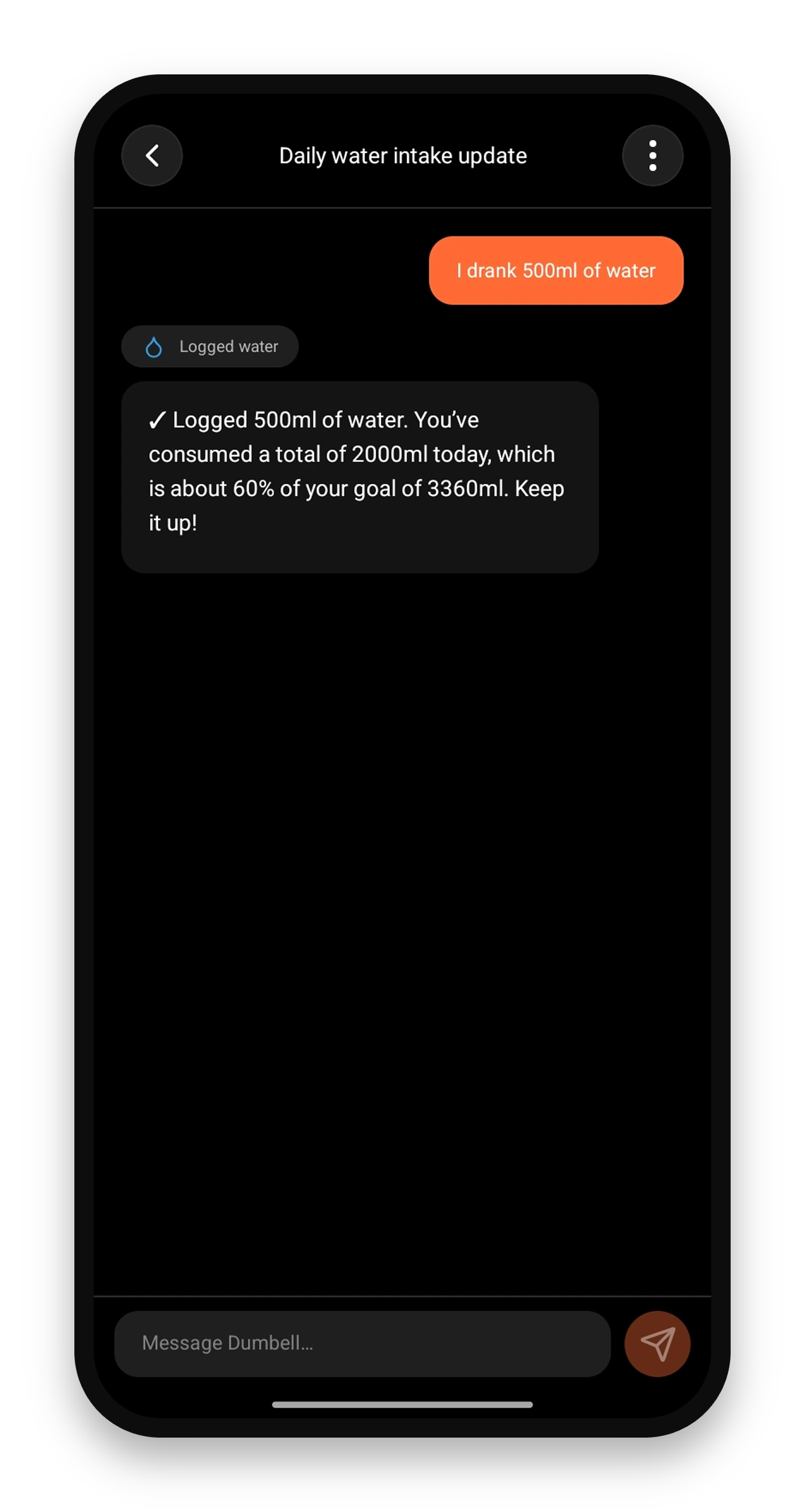
Health & Lifts builds your workout with AI, counts your calories by barcode, and adjusts everything as you progress.
Do I need to add weight every week?
No. Load is just one way to progress. You also progress by doing more reps, more sets, cleaner execution or shorter rest. What matters is that the stimulus grows over time, not on every single session.
What do I do when I stall on an exercise?
Plateaus are normal. Try changing the progression variable (swap weight for reps, for example), check your sleep and nutrition, or take a lighter week (a deload) to recover. If it persists, a professional can help adjust your program.
AI workouts, an AI diet, a calorie counter, and an AI personal trainer in your pocket.
A simple guide for anyone who has never trained: your first workout, how many times a week to go, and the most common beginner mistakes.
Learn how to build an ABC workout split from scratch: how to divide muscle groups, how many sets to do, and a ready-to-use example for hypertrophy.